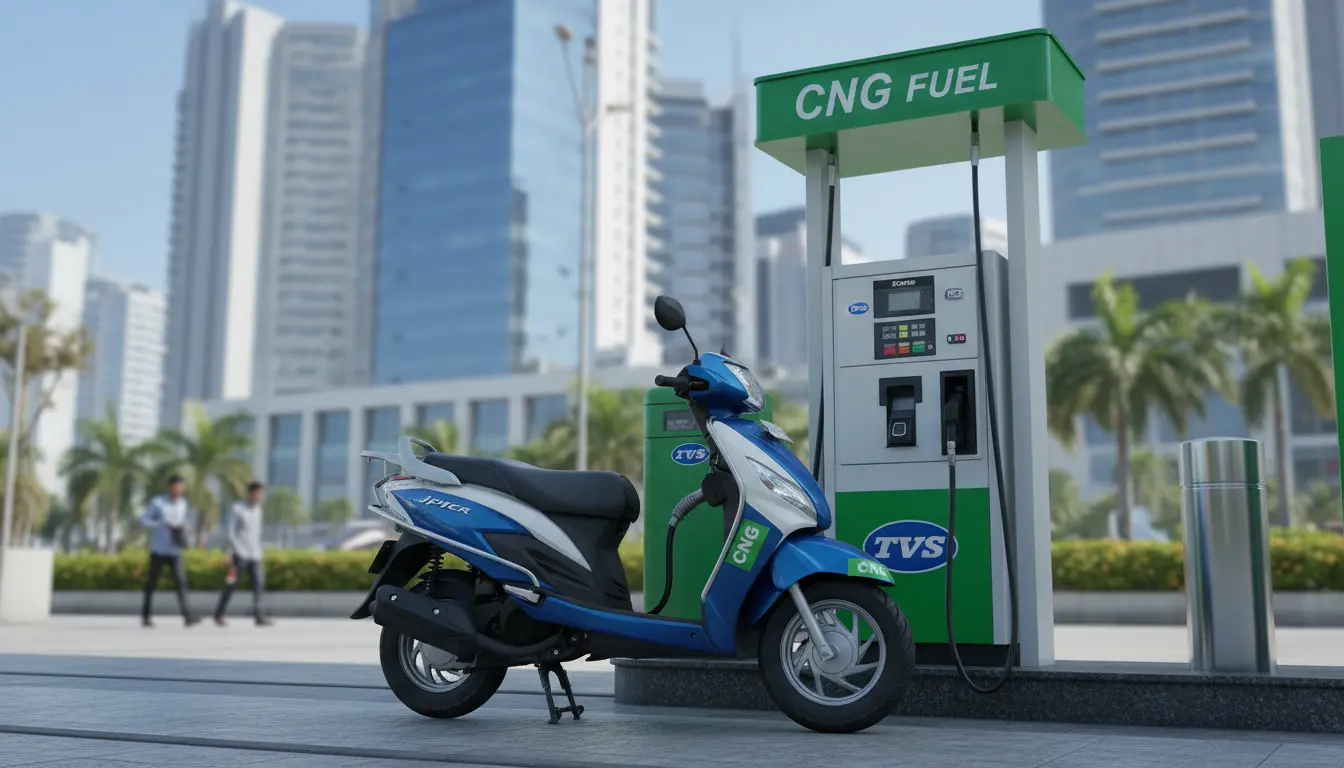
Overview: TVS Jupiter CNG 2026
The TVS Jupiter CNG 2026 is positioned as an economical choice for city commuters who want lower running costs and predictable fuel expenses. It pairs a commuter-friendly scooter layout with a factory-fitted CNG system designed for daily urban use.
This article covers real-world mileage expectations, running cost math, maintenance considerations, and practical tips to get the best from the TVS Jupiter CNG 2026. The focus is on neutral, actionable information for buyers and riders.
Mileage and Fuel Economy for TVS Jupiter CNG 2026

TVS advertises an approximate mileage of 70 Km/kg for the CNG variant, which refers to kilometers per kilogram of compressed natural gas. In city conditions, actual mileage will vary with load, traffic, driving style, and terrain.
Expect a range of 60–75 Km/kg in mixed urban riding. Conservative planning assumes 65 Km/kg for cost calculations and trip planning.
Understanding 70 Km/kg in daily terms
If you ride 30 km per day, a scooter that achieves 70 Km/kg will need about 0.43 kg of CNG daily. Monthly use of 900 km would consume approximately 12.9 kg of CNG.

These simple conversions help estimate refueling frequency and monthly expense compared with petrol alternatives.
Running Cost Comparison
To compare running costs, multiply the per-kg price of CNG by monthly consumption and compare with equivalent petrol cost for the same kilometres. Use local fuel prices for accurate results.
- Example calculation: If CNG costs 70 per kg and monthly use is 12.9 kg, monthly fuel cost = 903.
- Compare with petrol: if petrol is 110 per litre and petrol mileage is 40 km/l, monthly petrol cost for 900 km = (900/40)*110 = 2475.
In this example the CNG variant is markedly cheaper to run, but initial price and refueling convenience must be considered.
Features and Practical Design Points

The TVS Jupiter CNG 2026 retains the practical ergonomics of the Jupiter line: a roomy seat, upright riding posture, and a utility-focused instrument cluster. The CNG cylinder is integrated to minimize compromise on storage and balance.
Key points to check before purchase include cylinder placement, additional weight distribution, and official safety certifications from TVS and relevant authorities.
What to inspect on delivery
- Confirm factory CNG certification and sticker documentation.
- Inspect mounting points and frame integrity around the tank area.
- Check spare tyre access and under-seat storage usability after cylinder fitment.
- Request the service schedule specific to the CNG system.
Maintenance and Safety Guidance
CNG systems require scheduled checks beyond standard scooter service. Valve seals, pressure regulators, and gas lines need periodic inspection by authorized technicians.
Always follow the manufacturer’s service intervals and use authorized TVS service centers for CNG-specific work to maintain warranty and safety standards.
Practical maintenance tips
- Have the cylinder pressure regulator checked every 6 months or per the manual.
- Use genuine service parts and certified technicians only.
- Carry a small tool kit and the cylinder inspection certificate when riding long distances.
The energy density of CNG by weight is lower than petrol, but the lower cost per unit and cleaner combustion often lead to lower per-kilometer running costs in urban use.
Refueling and Range Planning
CNG refueling infrastructure varies by city. Large metro areas typically have dedicated CNG stations and quick refill options, while smaller towns may require planning to reach a refueling point.
Plan routes around available CNG stations, and consider keeping a range buffer of 20–30% to avoid being stranded near areas with limited refueling.
Refueling checklist
- Carry cylinder documentation and your vehicle registration when refueling at public CNG pumps.
- Refill during off-peak hours to avoid long queues at busy stations.
- Use station maps and apps to locate nearby CNG outlets before long trips.
Case Study: Commuter Savings in a Metro City
Ravi, a software professional in a metro city, switched to the TVS Jupiter CNG 2026 for his 28 km daily round trip. He averages 68 Km/kg and refuels twice a week.
Monthly math for Ravi: 28 km/day × 22 working days = 616 km. At 68 Km/kg he uses ~9.1 kg. At an assumed CNG price of 70 per kg, monthly fuel cost = 637. Ravi reports saving about 60–70% on fuel compared to his previous petrol scooter.
Is the TVS Jupiter CNG 2026 Right for You?
Choose the TVS Jupiter CNG 2026 if your daily riding is urban-heavy, refueling infrastructure is accessible, and you prioritize lower running costs. It is best suited for commuters and fleet operations where predictable fuel expenses are a priority.
If you often ride long rural distances where CNG stations are scarce, a petrol or hybrid option may be more practical.
Quick pros and cons
- Pros: Low running cost, cleaner exhaust, reliable urban range.
- Cons: Limited refueling points in some areas, slight weight increase, specialized maintenance.
Use the mileage estimates and maintenance checklist above to decide, and verify local station coverage before final purchase. Small choices in riding habit and maintenance can keep the TVS Jupiter CNG 2026 both economical and reliable for urban mobility.