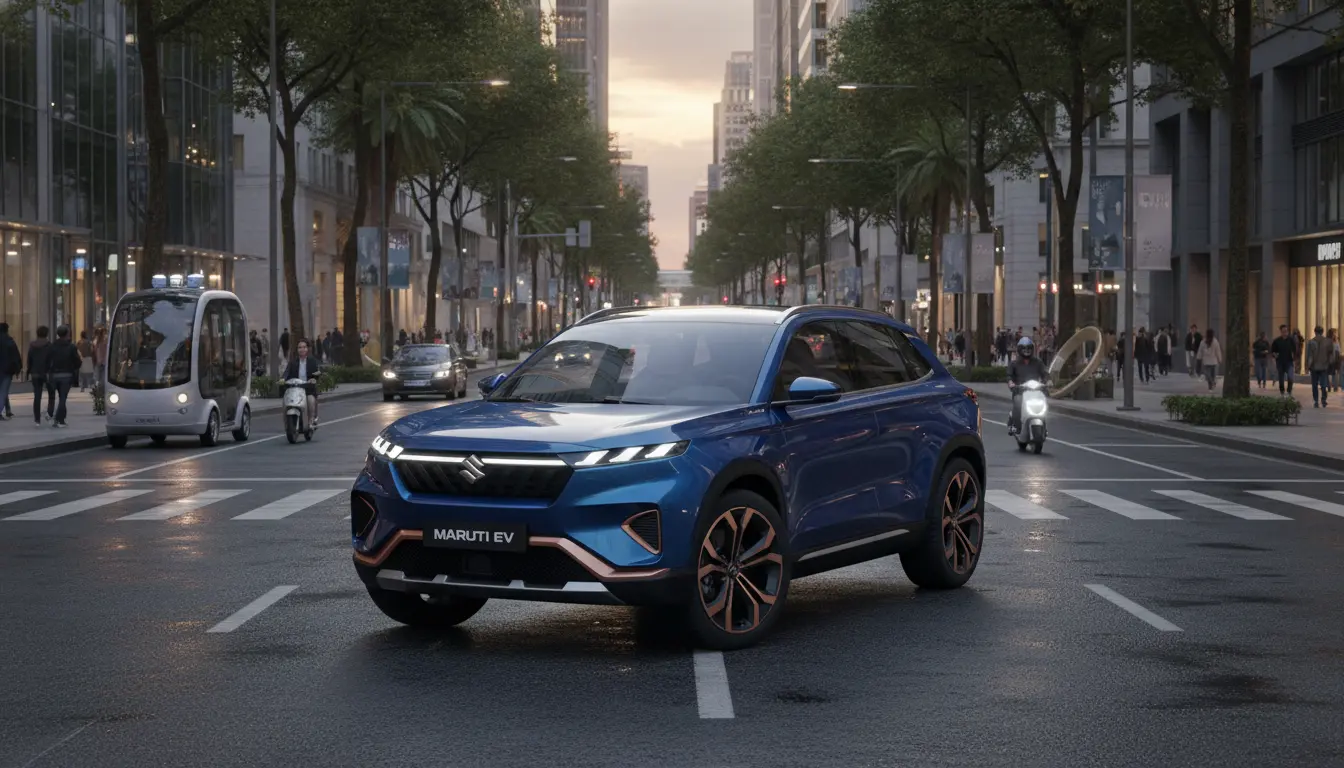
2026 Maruti Suzuki e Vitara: What to expect
The 2026 Maruti Suzuki e Vitara targets families who need a practical electric SUV. This guide explains core features, charging, cost of ownership, and how the e Vitara fits into daily life.
Read this to decide whether the e Vitara meets your family needs, commuting patterns, and budget.
2026 Maruti Suzuki e Vitara design and space

The e Vitara keeps the Vitara’s upright SUV shape and a family-friendly interior. Expect a roomy cabin, flexible rear seating, and a practical boot for strollers, sports gear, or shopping.
Practical touches likely include sliding rear seats, multiple storage bins, and ISOFIX anchors for child seats. These features make it simple to organize daily school runs and weekend trips.
Interior layout and comfort in the 2026 Maruti Suzuki e Vitara
Seats are expected to be tuned for comfort with sufficient headroom and legroom for adults in the rear. Climate controls and a flat cabin floor improve usable space for families.

Materials should be durable, easy to clean, and suited to family use. Look for washable floor mats and stain-resistant seat fabrics in higher trims.
Range, battery, and charging
The e Vitara should offer battery options that balance daily range with cost. Think of practical ranges that cover city commuting and regional driving without frequent charging stops.
Charging speed and compatibility with public fast chargers are important. Expect compatibility with AC home charging and DC fast charging for longer drives.
- Estimated battery options: practical mid-size batteries for 300–450 km (estimated WLTP) on a full charge.
- AC home charging: overnight full charge with a 7–11 kW wallbox.
- DC fast charging: 20–80% in around 30–45 minutes depending on charger power (manufacturer claims and infrastructure apply).
Charging tips for families

Install a home charger to reduce public charging dependence. Schedule charging overnight to take advantage of lower electricity rates and to always start the day with a full battery.
Plan long trips around fast-charging locations and build flexible stops into itineraries so charging fits naturally with breaks and meals.
Performance and driving for family life
The e Vitara focuses on smooth, predictable power delivery rather than sporty performance. Electric torque makes city starts effortless and merging on highways straightforward.
Regenerative braking helps extend range in stop-start traffic and reduces brake wear, which lowers maintenance costs over time.
Safety and driver assistance
Safety is a top priority for families. Expect modern active safety systems and passive protection typical of current compact SUVs.
- Driver assistance: adaptive cruise control, lane-keeping assist, and automatic emergency braking.
- Passive safety: multiple airbags, reinforced passenger cell, and child-seat anchors.
- Convenience: 360-degree camera and parking sensors to help in tight urban spaces.
Ownership costs and incentives
Electric vehicles often have lower running costs than petrol cars because of cheaper per-kilometer energy costs and fewer moving parts to service. Expect savings on fuel and routine maintenance.
Check local incentives, tax breaks, or subsidies for EV buyers in your area. These can reduce upfront cost and improve total cost of ownership.
Maintenance and warranty
EV maintenance focuses on battery health, tires, brakes, and software updates. Many manufacturers offer multi-year warranties on the battery and powertrain that increase ownership confidence.
Practical features for modern families
The e Vitara is likely to include family-friendly tech such as connected infotainment, smartphone integration, and in-car Wi‑Fi options for long journeys.
Practical add-ons that matter include roof rails for extra luggage, tow capacity for small trailers or bikes, and modular storage solutions in the boot.
Smart features to look for
- Remote climate control to cool or heat the cabin before a trip.
- Integrated apps to find charging stations and plan routes with charging stops.
- Over-the-air software updates to improve features without dealer visits.
Charging an electric SUV overnight at home can cost less per kilometer than running a small petrol car, depending on your electricity rate and driving habits.
Case study: A small family’s weekly use of the 2026 Maruti Suzuki e Vitara
Rahul and Priya live in Pune with a two-year-old child. Their typical week includes a 20 km round-trip commute, a few local errands, and a weekend 150 km round trip to visit family.
With an estimated daily use of 40–60 km, the couple charges the e Vitara at home twice a week and uses public fast charging for the weekend trip. They report lower monthly running costs and more cabin comfort during longer drives.
How to choose the right trim and options
Decide what matters most: budget, range, or convenience. If you mostly drive in the city, a mid-range battery and standard charger could be enough. For frequent long trips, consider the higher battery option and faster DC charging capability.
Test drive different trims to compare ride comfort, interior storage, and tech usability. Bring child seats to confirm fit and visibility for rear passengers.
Final checklist before buying the 2026 Maruti Suzuki e Vitara
- Confirm realistic range figures for your driving style and climate.
- Plan home-charging installation and local fast-charge availability.
- Check warranty terms for battery and powertrain.
- Test interior space with actual family gear (stroller, car seats, luggage).
- Compare total cost of ownership versus equivalent petrol SUVs.
The 2026 Maruti Suzuki e Vitara promises to be a practical electric SUV tailored to modern family needs. Focus on realistic range, charging convenience, and family-focused features when you evaluate it for purchase.