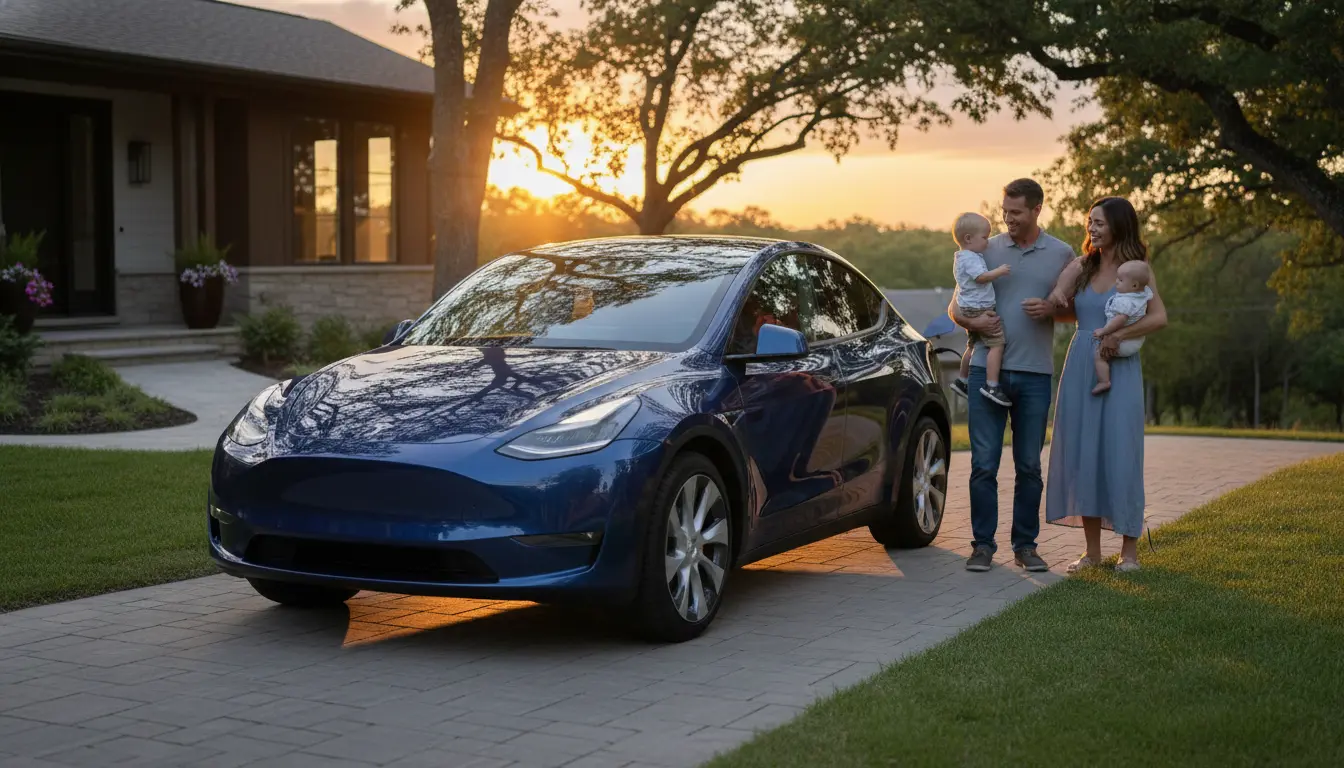
The 2026 Maruti Suzuki e Vitara is positioned as a compact electric SUV aimed at modern families who need space, efficiency, and simple daily usability.
This article takes a practical look at expected features, ownership costs, and how this model may fit into a family routine. It focuses on usable information you can apply when comparing EVs or planning a purchase.
2026 Maruti Suzuki e Vitara overview

The 2026 Maruti Suzuki e Vitara brings electric drive to a family-friendly SUV package. Expect a focus on interior space, straightforward tech, and cost-effective ownership.
Maruti traditionally targets value and practicality, so anticipate options tuned for efficiency alongside convenience features important for family use. Specifications presented here are framed as typical expectations and comparison points rather than final factory claims.
Design and interior space of the e Vitara
The e Vitara should keep a compact footprint for city parking while offering a roomy cabin. Practical storage, modular rear seating, and easy ingress are likely design priorities for families.

Key expected interior advantages include good headroom, a flat floor in the rear for passenger comfort, and multiple cubbies for small items. Materials are likely durable and easy to clean, matching family needs.
Family-friendly features
- Spacious rear bench and ISOFIX anchors for child seats.
- Large door openings and low step-in height for easy loading.
- Practical boot space with underfloor storage for cables and tools.
Battery, range, and charging for the 2026 e Vitara
Range expectations for compact electric SUVs in this segment are typically between 300 km and 450 km on a full charge, depending on battery size and driving conditions.
Charging options will be a key consideration. Look for AC home charging compatibility and an optional DC fast charging capability for longer trips.
Typical charging profile
- Home AC charger (7 kW): overnight full charge, roughly 6-10 hours depending on battery size.
- Public DC fast charge (50-100 kW): 20-80% in approximately 30-60 minutes in many cases.
- Regenerative braking settings to extend urban range during frequent stops.
Safety and tech for modern families

Safety features for family vehicles are critical. Expect standard active safety systems and passive protections tailored for family occupants.
Driver assistance suites commonly include automatic emergency braking, lane-keep assist, and adaptive cruise control in modern compact SUVs. A clear, simple infotainment system with smartphone integration is also important for everyday use.
- Expected safety items: multiple airbags, ABS with EBD, stability control, and child seat anchors.
- Expected tech: a touchscreen with Apple CarPlay and Android Auto, over-the-air update support, and connected car features for remote monitoring.
Cost, running costs, and ownership
Electric ownership can lower operating costs through reduced fuel and maintenance expenses. Real savings depend on electricity prices, charging habits, and incentives.
Estimate running costs by comparing per-kilometer electricity cost to current fuel cost for a similar petrol model. Also account for lower service needs, as EVs have fewer moving parts than internal combustion engines.
- Typical ownership advantages: lower per-km energy cost, reduced brake wear, and fewer scheduled services.
- Consider installation cost for a home charger and potential government incentives that reduce purchase cost.
Charging overnight at home during off-peak hours can cut annual running costs and simplify daily life. Many households recover most daily driving range with a single nightly charge.
Practical tips when evaluating the 2026 Maruti Suzuki e Vitara
When you test drive or compare trims, bring a normal family load to judge real-world space. Try folding one rear seat and loading typical items to check ease of use.
Compare warranty and battery coverage across trims. Prioritize real charging speed and network access over headline range numbers for daily convenience.
- Test the infotainment and connectivity in a real route to check responsiveness and clarity.
- Ask for a demonstration of regenerative braking settings and range estimation tools.
- Confirm spare parts and service center availability in your area for long-term ownership.
Small real-world example
Case study: The Sharma family uses an electric SUV for school runs, shopping, and two weekly weekend trips. Their typical daily distance is 60 km. Overnight charging at home provides 100% readiness each morning without using public chargers.
With an estimated real-world range of 360 km, the family charges at home twice a week and uses public DC charging during a 200 km weekend trip. This routine keeps running costs low and reduces time spent on fueling compared with petrol alternatives.
How to decide if the e Vitara fits your family
List your daily mileage, access to home charging, and typical luggage needs. If daily distances are moderate and home charging is available, an electric SUV like the e Vitara can simplify ownership and lower running costs.
Consider total cost of ownership, charging infrastructure in your region, and resale projections. These practical factors will determine whether the e Vitara meets your family priorities.
In summary, the 2026 Maruti Suzuki e Vitara promises to combine a family-focused interior with electric efficiency. Use the tips above to compare trims, test drive with real loads, and plan charging to match your routine before deciding.