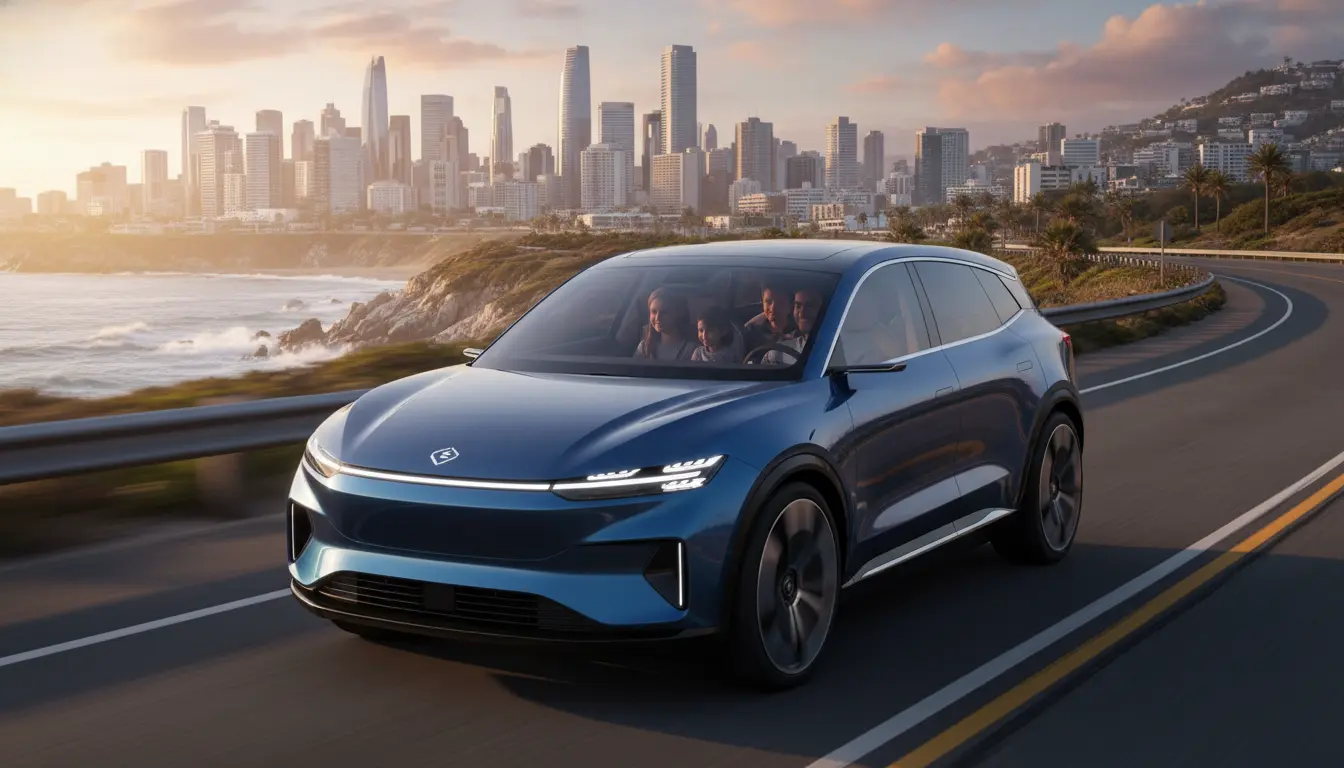
Overview of the 2026 Maruti Suzuki e Vitara
The 2026 Maruti Suzuki e Vitara is a compact electric SUV aimed at modern families who want a practical EV without complexity. It combines family-friendly space, a focus on efficiency, and a range of safety and convenience features.
This article explains the key specs, ownership costs, real-world range expectations, and practical buying tips for families considering the e Vitara.
Key specifications for 2026 Maruti Suzuki e Vitara

Here are the headline specifications you should know when evaluating the e Vitara for daily family use.
- Battery pack: estimated 55–65 kWh usable capacity
- Range: expected 350–450 km WLTP equivalent depending on variant and driving style
- Charging: up to 150 kW DC fast charging capability
- Motor output: around 150–200 PS combined in higher trims
- Seating: five adults with a flexible boot and rear ISOFIX anchors
Design and interior space of the e Vitara
The exterior design keeps the Vitara’s familiar silhouette while using aerodynamic cues to improve efficiency. Ground clearance and roof rails are maintained for family practicality.
Inside, the layout focuses on usable storage and easy-to-clean surfaces. Rear-seat legroom is competitive in its class, and the boot has a flat load floor when the rear seats fold.
Practical interior features
- Multiple storage cubbies and cup holders for family items
- Rear USB-C charging points for devices
- Removable cargo floor or split-folding seats for flexible luggage space
Battery, range, and real-world performance

The WLTP range numbers are a useful benchmark, but real-world range depends on speed, climate, and load. Families who use climate control, carry child seats, and run errands will see different figures than a solo commuter.
Expect real-world range closer to 300–380 km in mixed city and highway use on a full charge. Conservative driving and regenerative braking will extend that number.
Tips to maximize range
- Use eco drive modes for daily city use
- Plan trips to avoid high-speed stretches when possible
- Precondition the cabin while plugged in to save battery on the road
Charging and ownership costs
The e Vitara supports AC home charging and DC fast charging for longer trips. A typical home charger (7–11 kW) will fully charge the battery overnight.

With publicly available DC chargers at up to 150 kW, an 80% charge can be achieved in roughly 30–40 minutes depending on battery state and conditions.
Estimated running costs
- Electricity cost per km will vary by local rates; expect lower per-kilometre costs than petrol equivalents in most regions
- Maintenance is generally lower for EVs due to fewer moving parts and no oil changes
- Check warranty details for battery coverage and roadside assistance
Safety and driver assistance
Maruti Suzuki equips the e Vitara with modern safety systems suitable for family use. Expect a package that includes airbags, ABS with EBD, stability control, and ISOFIX anchors.
Higher trims add advanced driver assistance features such as adaptive cruise control, lane-keep assist, and automatic emergency braking.
Practical buying tips for families
Use these steps to decide if the 2026 Maruti Suzuki e Vitara fits your family needs.
- Calculate daily driving distance and check if home charging is possible.
- Test drive with typical family load to assess comfort and visibility.
- Compare running costs with your current car using local electricity prices.
- Check service network and battery warranty terms in your region.
What to ask at the dealership
- Confirm AC and DC charging speeds and compatible public charging networks.
- Ask about included charging equipment and installation offers.
- Clarify battery health checks and long-term range expectations.
Many modern EVs, including the e Vitara, recover significant energy through regenerative braking in city driving, which can improve urban range by up to 15–20% compared with a steady highway drive.
Real-world example: Weekend family trip
Scenario: A family of four plans a 250 km round trip with moderate luggage and intermittent highway driving. They start with a full charge and use climate control intermittently.
Result: With mixed driving and conservative speeds, the e Vitara completes the trip with a comfortable buffer of battery left. A short 20–30 minute DC charge at the halfway point adds flexibility for unplanned stops or longer detours.
Case study: City parent switching from petrol SUV
A commuter parent replaced a small petrol SUV with an e Vitara and found monthly fuel costs dropped by about 60% after switching to mostly home charging. Maintenance visits declined, and the family appreciated the quiet cabin and simpler daily routine.
Key takeaway: For urban families with regular home charging access, the e Vitara can reduce running costs and vehicle complexity while keeping practical space and safety features.
Final assessment of the 2026 Maruti Suzuki e Vitara
The 2026 Maruti Suzuki e Vitara presents a balanced choice for families wanting an electric SUV that prioritizes practicality and low ownership costs. It does not aim to be the sportiest or most luxurious model, but focuses on sensible features that matter to everyday family life.
Before buying, compare local charging options, check warranty details, and take a loaded test drive to ensure it meets your daily needs.