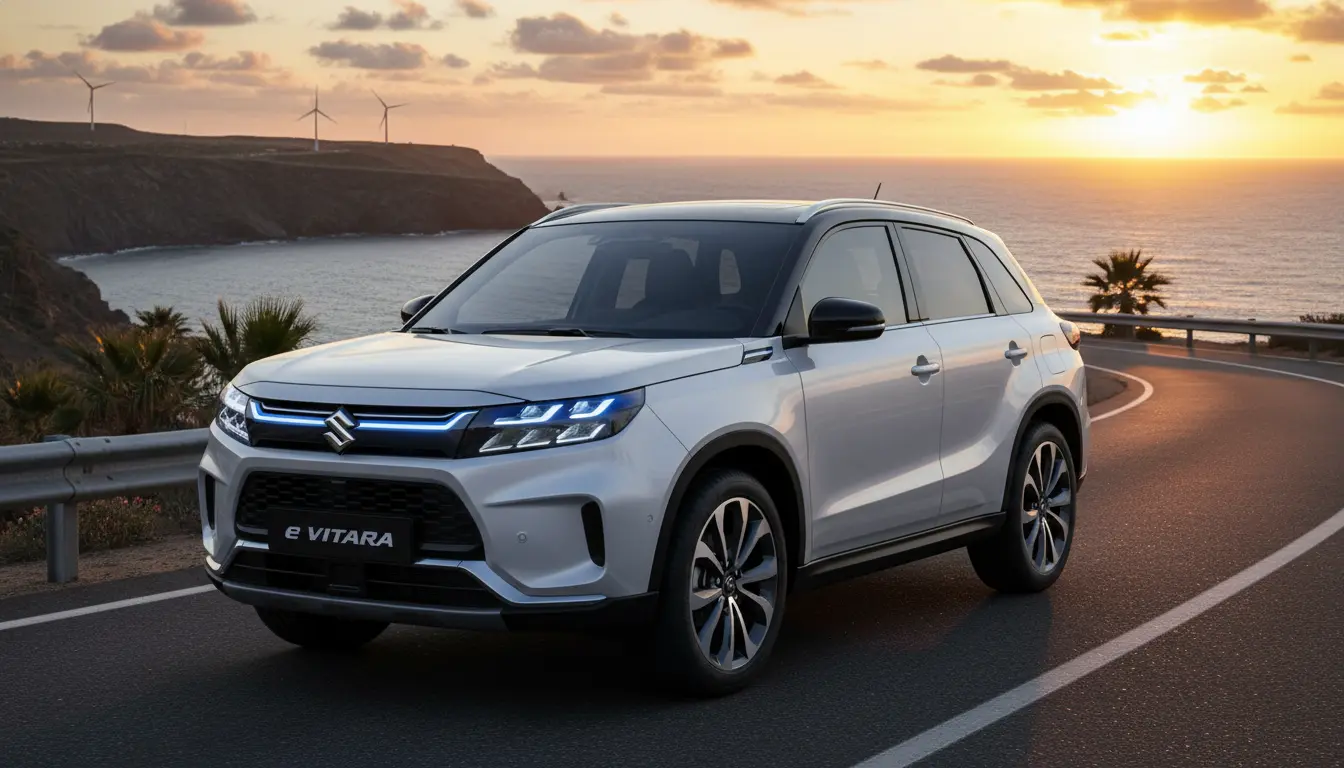
Overview of the 2026 Maruti Suzuki e Vitara
The 2026 Maruti Suzuki e Vitara positions itself as a smart electric SUV aimed at modern families who want practicality and efficiency. It blends familiar SUV space with electric powertrain benefits like lower running costs and quieter driving.
This article explains the key features, expected range and charging options, interior space, safety and ownership considerations. It uses neutral, practical language to help buyers compare and plan.
Key specifications and expected performance

The 2026 Maruti Suzuki e Vitara is expected to use a compact electric motor with an estimated battery pack sized for everyday family use. Expected specifications include a WLTP-like range of 300–400 km on a single charge and 0–100 km/h in about 8–10 seconds for the higher trim.
Battery capacity, charging rates, and final performance figures will vary by variant. Consider these practical points when evaluating models.
Battery and charging
Owners should look for these charging features:
- AC home charging via a 7–11 kW onboard charger for overnight top-ups.
- DC fast charging capable of 50–150 kW to add 20–80% charge in roughly 30–60 minutes, depending on the station and battery state.
- Battery thermal management to protect longevity in hot climates.

Tip: If you mostly drive less than 60 km per day, a home charger and occasional fast charging at public stations are sufficient for most families.
Interior space and family-friendly features
The e Vitara emphasizes usable interior space. Expect a flat centre floor, better footroom for rear passengers, and a cargo area comparable to compact SUVs in the segment.
Key family features likely include ISOFIX child anchor points, multiple USB-C ports, a practical centre console, and configurable rear seats for longer items.
Practical cabin layout
- Split-folding rear seats for flexible cargo and passenger arrangements.
- Easy-to-clean upholstery options for families with young children.
- Large door openings and a moderately high ride height for simple child seat installation.
Safety, driver aids, and technology

Safety is a priority for family buyers. The e Vitara is expected to include a modern safety suite with multiple airbags, ABS with EBD, and electronic stability control.
Advanced driver assistance systems (ADAS) such as adaptive cruise control, lane-keep assist, and automatic emergency braking may be available in higher trims. Check each trim’s feature list before purchase.
Infotainment and connectivity
Expect a touchscreen infotainment system with smartphone mirroring, built-in navigation, and over-the-air update capability. Voice controls and simple menus are helpful for family journeys where ease of use matters.
Running costs and ownership considerations
Electric vehicles generally offer lower fuel costs and fewer moving parts than ICE cars. Owners of the 2026 Maruti Suzuki e Vitara can expect reduced servicing frequency and lower per-kilometre energy costs compared to petrol SUVs.
Consider the total cost of ownership, including home charger installation, public charging costs, battery warranty, and insurance premiums when comparing models.
Charging habits and electricity costs
- Home charging overnight at off-peak rates is the cheapest option.
- Use public DC fast chargers for long trips; plan stops in advance to avoid waiting times.
- Monitor battery health and follow manufacturer charging recommendations to maintain battery life.
Charging an electric SUV at home overnight can cost less than half of what you would spend on petrol for the same daily distance in many cities. Small changes in driving and charging habits can extend battery life and reduce costs.
Practical tips for families considering the 2026 Maruti Suzuki e Vitara
- Estimate daily driving distance and check local charging infrastructure availability before buying.
- Install a level-2 home charger if you can, it makes daily use convenient and quick.
- Compare warranty terms, especially battery warranty limits and coverage.
- Test drive different trims to assess rear-seat comfort and cargo layout for strollers or sports gear.
Real-world example: A small family using the e Vitara
Case study: A family of four in a mid-size city used an e Vitara for six months for daily school runs and weekend trips. Their average daily driving was 45 km and they charged overnight at home.
Results: The family reported lower monthly fuel costs, quieter rides, and no routine engine servicing other than basic checks. On a 200 km weekend trip, they used a single DC fast-charging stop, which added convenience without significant time loss.
How to choose the right trim and options
When selecting a trim, prioritize features that matter to your family: range, fast-charging capability, and cabin comfort. Safety and warranty should be non-negotiable items on your checklist.
Compare running cost estimates for each trim, and request an itemized list of standard and optional equipment. Ask dealers about real-world range figures in local conditions.
Final practical checklist before buying
- Confirm realistic range for your driving style and climate.
- Plan home charger setup and get quotes for installation.
- Review battery warranty terms and service intervals.
- Test-fit child seats and cargo arrangements you regularly use.
- Compare total cost of ownership with equivalent petrol/diesel SUVs.
The 2026 Maruti Suzuki e Vitara is a practical option for modern families seeking an electric SUV that balances everyday usability with lower running costs. Use the checklist and tips above to evaluate if it fits your household needs before making a purchase decision.