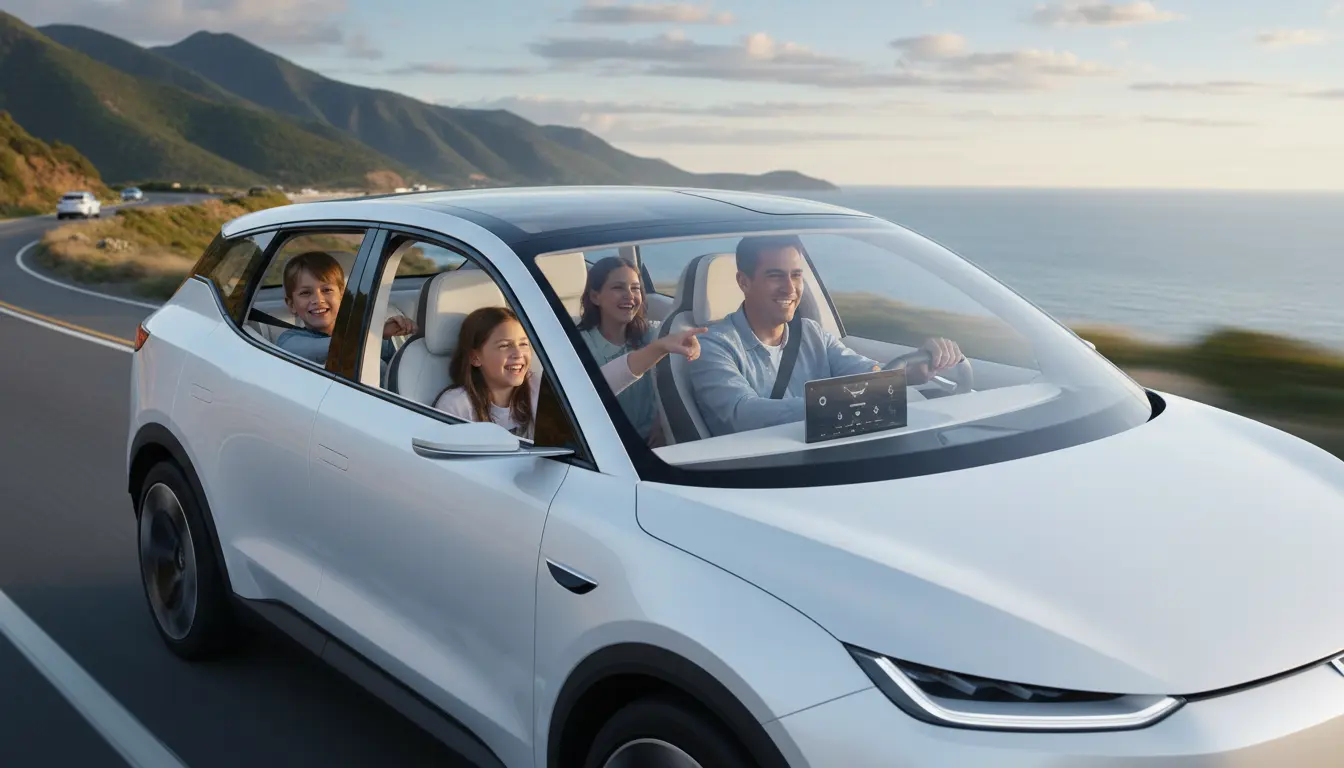
Overview of the 2026 Maruti Suzuki e Vitara
The 2026 Maruti Suzuki e Vitara is positioned as a compact electric SUV aimed at modern families who want efficiency and practicality. It blends family-friendly space with updated EV technology to reduce daily running costs and simplify ownership.
This article explains the key specs, interior layout, charging options, safety and ownership costs so you can judge whether the e Vitara fits your family routine.
Key specifications of the 2026 Maruti Suzuki e Vitara

Knowing the basic specs helps set realistic expectations for range, performance and running costs. Below are the headline figures available from the factory release and early testing.
- Battery: ~50–60 kWh usable capacity (estimated)
- Range: 300–420 km (WLTP estimate depends on battery and trim)
- Motor output: 120–150 kW combined electric drive
- Charging: DC fast charging up to 100 kW, AC home charging 7–11 kW
- Seating: 5 adults with flexible cargo layout
Practical design and interior space
The e Vitara retains the Vitara’s compact footprint while improving interior space through clever packaging of battery modules. Rear legroom and boot capacity are competitive for the segment.
Typical family-friendly features include split rear seats, underfloor storage, and modular luggage anchors. These small details make school runs and grocery trips easier.
Range and charging guide

Range depends on driving style, load and climate. Expect 300–420 km on a full charge in mixed driving. City driving is more efficient and can extend real-world range.
Charging strategy for families:
- Install an overnight home AC charger (7 kW) to cover daily needs.
- Use public DC fast chargers for long trips; a 30-minute charge can add ~150 km depending on conditions.
- Plan long journeys around charging points and allow buffer time for stops.
Smart features for modern families
The e Vitara focuses on practical connected features that reduce hassle for busy households. Connectivity and driver assists support safer and easier driving.
- Infotainment: smartphone integration, remote climate pre-conditioning and vehicle status via an app.
- Driver aids: adaptive cruise control, lane keep assist and automatic emergency braking.
- Comfort: multi-zone climate control and heated seats in higher trims.
Safety and family convenience

Child safety is a priority with ISOFIX anchors and multiple airbags. The higher trims typically include advanced safety suites that help prevent low-speed collisions and reduce stress in traffic.
Storage solutions and easy-to-clean materials are practical touches for families with young children.
Cost of ownership and real-world efficiency
Electric vehicles usually have lower running and maintenance costs than petrol cars. The e Vitara benefits from fewer moving parts, no oil changes, and lower per-kilometre energy costs.
Estimate comparison for a typical family doing 12,000 km per year:
- Electric energy cost: Varies by tariff, typically lower than petrol cost equivalence.
- Maintenance: Reduced routine servicing; brake wear is often lower thanks to regenerative braking.
- Insurance and taxes: May vary by region and incentives for EV buyers.
Regenerative braking on modern EVs can recover 10–20% of city driving energy, extending range and reducing brake wear.
Charging setup checklist for families
Setting up a reliable charging routine reduces stress and keeps the vehicle ready for daily life. Here is a quick checklist to prepare your home and routines.
- Assess home electrical capacity and upgrade if needed for a 7 kW charger.
- Choose a reputable installer and ensure charger supports scheduled charging.
- Register for local public charging apps and plan preferred network memberships.
- Use an economy or off-peak tariff for overnight charging to cut costs.
Common owner tips
- Keep battery state of charge between 20% and 90% for daily use to extend battery life.
- Pre-condition cabin while plugged in to save battery range on cold days.
- Use driving modes (eco, normal) to match performance to daily needs.
Case Study: Suburban Family Using the e Vitara
Background: A family of four in a suburban area replaced a petrol compact SUV with the e Vitara to reduce fuel costs and simplify running needs.
Monthly driving: ~1,000 km with a mix of school runs and weekend trips. They installed a 7 kW home charger and used public fast chargers for motorway trips.
Outcomes:
- Average monthly energy cost was about 40–60% lower than previous petrol expenses depending on local electricity prices.
- Maintenance visits decreased; only annual checks and occasional tyre services were required.
- They reported improved cabin comfort and quieter driving, which made short trips less stressful with kids.
Is the 2026 Maruti Suzuki e Vitara right for your family?
Consider the e Vitara if your daily driving is within the expected range and you can install home charging. It suits families who want reduced running costs, practical space and modern safety features.
If you frequently drive long rural routes with limited charging, evaluate whether available fast charging networks meet your needs before deciding.
Final tip: Take a thorough test drive with children and luggage to confirm the seating, boot layout and daily usability meet your family’s routine.