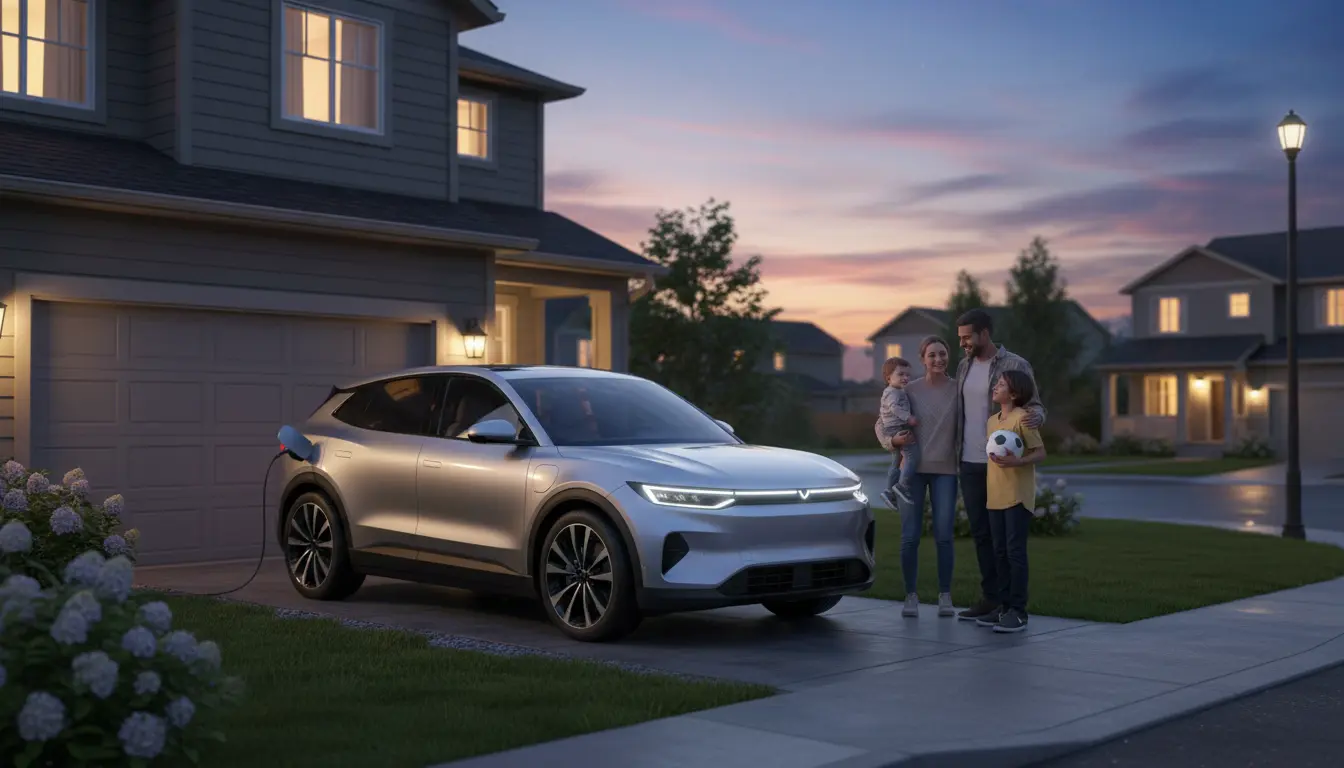
The 2026 Maruti Suzuki e Vitara is positioned as a compact electric SUV aimed at families who want a practical, efficient daily vehicle. This article explains the important specifications, real-world usability, costs, and features you should check before choosing the e Vitara.
Overview of the 2026 Maruti Suzuki e Vitara
The 2026 Maruti Suzuki e Vitara combines a familiar SUV shape with an electric powertrain and family-focused features. Expect a layout designed for five occupants with flexible storage and modern connectivity.
This overview focuses on what families will actually use: range, interior space, charging, safety, and total running costs rather than marketing claims.
2026 Maruti Suzuki e Vitara range and battery
Battery capacity and estimated range
The e Vitara is expected to use a mid-size battery pack in the 50–65 kWh range. That should translate to a practical real-world range of about 300–400 km per full charge depending on driving style and load.
Realistic range estimates are useful for family planning: daily commutes, school runs, weekend trips, and occasional longer drives.
Energy usage and efficiency
Electric SUVs typically use between 15–20 kWh per 100 km in mixed driving. For a family, efficient driving habits and managing extra weight or roof loads will help maximize range.
Charging and home setup for the e Vitara
Home charging options
Most families will rely on a home wallbox for overnight charging. A 7 kW AC home charger will fully recharge a 60 kWh battery overnight (about 8–10 hours).
Recommended steps for home charging setup:
- Install a dedicated 7 kW or higher AC charger on a grounded circuit.
- Choose a location with easy cable storage and safe access from your parking spot.
- Use a certified installer to ensure warranty and electrical safety.
Public fast charging
DC fast charging capability (0–80% in roughly 30–45 minutes for a mid-size battery) is important for long trips. Check the vehicle’s maximum DC charging rate when comparing models.
Charging at public fast chargers is often billed per minute or per kWh. Slow, frequent top-ups at home are usually the cheapest way to operate an EV for daily family use.
Interior, comfort, and family features
Practical cabin layout
The e Vitara should offer a flat rear floor or minimal intrusion from the battery, meaning easier seating for child seats and more cargo flexibility. Look for ISOFIX anchors and clear rear-seat headroom when you test drive.
Useful family-focused features to check:
- Rear air vents and climate control zoning
- Multiple USB ports and a wireless device charging pad
- Large boot with a low load lip and optional split-folding seats
Safety and driver assistance in the e Vitara
Modern family EV buyers expect advanced safety aids. The e Vitara will likely include standard airbags, ABS, and stability control, plus driver aids such as lane-keep assist and adaptive cruise control in higher trims.
On the safety checklist: active collision mitigation, good crash-test ratings, and child-seat anchoring ease.
Running costs and ownership considerations
Electric vehicles have fewer moving parts than ICE cars, which reduces routine maintenance. Expect lower costs for servicing brakes, oil changes, and cooling systems.
Key cost factors to compare:
- Purchase price or monthly lease payments
- Home charging installation and electricity costs
- Public fast-charge costs and frequency of long trips
- Insurance and battery warranty coverage
Real-world example: suburban family switching to the e Vitara
Case: A family of four in a mid-sized suburban town replaced their compact petrol SUV with an e Vitara. Their typical use was a 30 km round-trip commute and 80 km of weekend driving.
Outcomes observed in 12 months:
- Average daily charging at home covered most needs; public fast charging used twice for a 320 km road trip.
- Estimated annual energy cost dropped by about 40–60% compared with petrol, depending on local electricity tariffs.
- Maintenance visits reduced to annual checks; no oil changes required.
This example shows the e Vitara can be practical for families with predictable daily patterns and occasional longer trips.
Buying considerations for the 2026 Maruti Suzuki e Vitara
When evaluating the e Vitara, prioritize features that matter to your family: real-world range, child-seat fitment, and charging convenience. Avoid buying based solely on peak range numbers from marketing materials.
Checklist before purchase:
- Confirm certified range and expected real-world results in owner forums or test drives.
- Check battery warranty length and coverage for capacity loss.
- Plan home charging and estimate electricity costs in your area.
- Test-fit child seats and evaluate rear visibility and storage options.
Practical verdict on the 2026 Maruti Suzuki e Vitara
The 2026 Maruti Suzuki e Vitara appears to be a sensible EV choice for modern families who need daily usability, lower running costs, and a comfortable interior. Its success will depend on confirmed range, charging speed, and pricing when it reaches the market.
Families should do a local test drive, confirm charging options, and calculate total cost of ownership to decide if the e Vitara matches their needs.